Polyvagal Theory: How Your Nervous System ShapesTrauma, Anxiety, and Healing
Polyvagal Theory is transforming how therapists, trauma specialists, and individuals understand the connection between the nervous system, mental health, and relationships. Developed by Dr. Stephen Porges, this theoretical framework offers a way to explain why we sometimes feel calm and connected, while at other times we feel anxious, overwhelmed, or completely shut down (Porges, 2011)¹.
If you’re searching for answers about trauma, anxiety, depression, or therapy techniques like somatic therapy, trauma therapy, or nervous system regulation, Polyvagal Theory provides a well-regarded theoretical framework for understanding these experiences, though much of its broader claims remain under investigation.
What Is Polyvagal Theory?
At the center of Polyvagal Theory is the vagus nerve, which plays a key role in regulating our autonomic nervous system. This system controls automatic bodily functions like breathing, heart rate, and digestion.
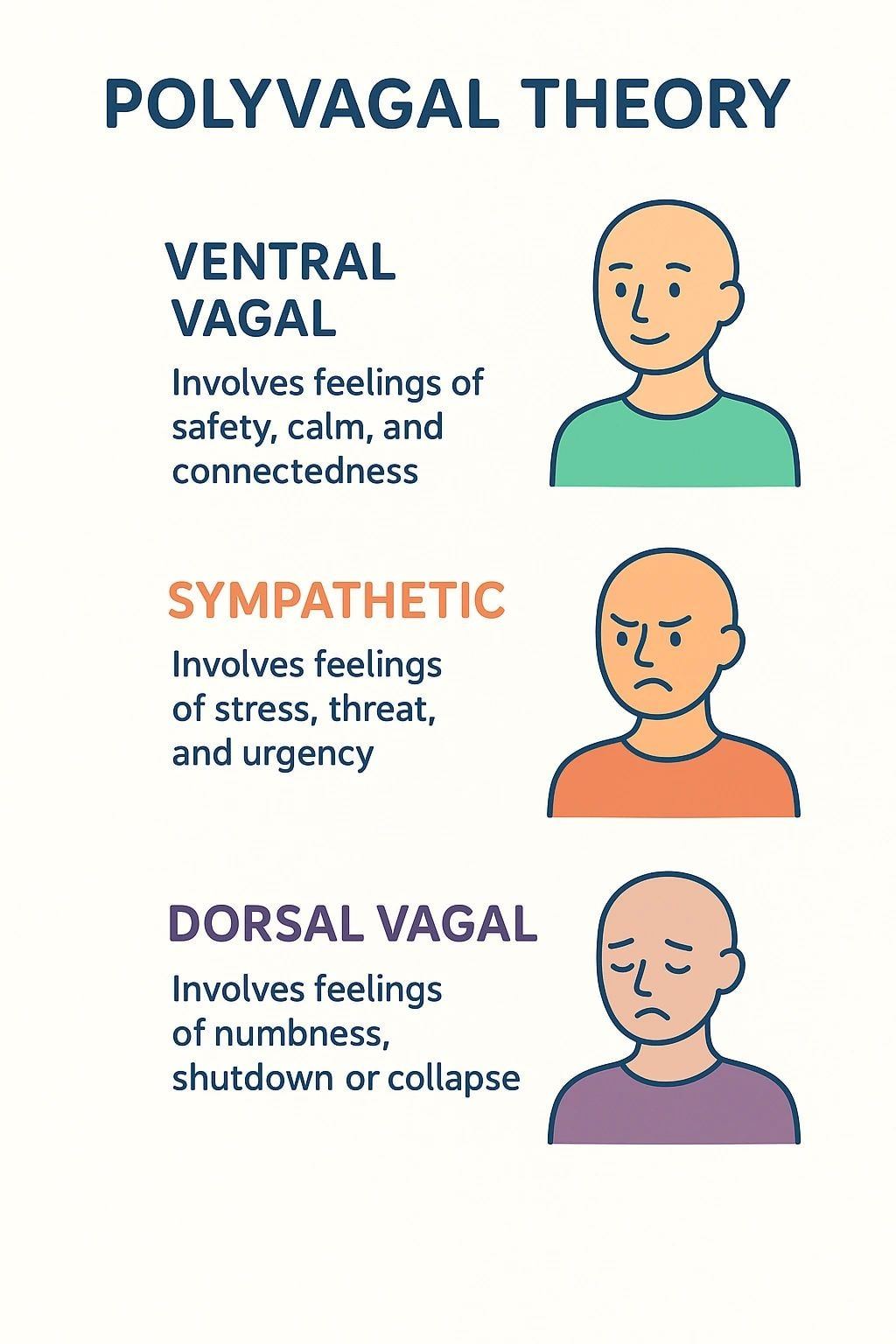
Dr. Porges identified three primary states of the nervous system that influence how we feel and respond to the world:
- Ventral Vagal State (Safety & Connection)
- Calm, grounded, socially engaged.
- Signs: steady breathing, relaxed heart rate, facial expressions of warmth.
- Associated with feelings of safety, trust, and openness.
- Sympathetic State (Fight-or-Flight)
- Mobilized to face danger or stress.
- Signs: racing heart, tense muscles, hypervigilance.
- Often linked to anxiety, panic, or chronic stress.
- Dorsal Vagal State (Shutdown / Freeze)
- Immobilization when fight or flight isn’t possible.
- Signs: numbness, withdrawal, exhaustion, or dissociation.
- Common in trauma survivors who feel “disconnected.”
This “ladder” of nervous system states helps explain why trauma, stress, and mental health struggles are not just “in your head” but deeply tied to biology (Dana, 2018)².
Polyvagal Theory and Mental Health Conditions
Polyvagal Theory is especially helpful for understanding:
- Trauma & PTSD: Survivors often get stuck in fight/flight (hyperarousal) or shutdown (dissociation).
- Anxiety Disorders: Chronic sympathetic activation leads to constant tension and worry.
- Depression: Often linked to prolonged dorsal vagal dominance, causing withdrawal and low energy.
- Autism & ADHD: Research explores how challenges with social engagement may relate to nervous system regulation (Porges & Kolacz, 2020)³.
- Chronic Pain: Stress and nervous system dysregulation can amplify physical pain.
By reframing these conditions as autonomic nervous system states, Polyvagal Theory offers a theoretical lens that may help reduce shame and highlight practical paths toward healing, though ongoing research continues to examine its empirical support.
Polyvagal-Informed Therapy Approaches
Therapists are using polyvagal-informed practices in many ways:
- Somatic Therapy: Helps clients reconnect with body sensations to regulate the nervous system.
- Trauma Therapy (e.g., EMDR, Somatic Experiencing): Uses body awareness and regulation techniques to process trauma safely.
- Breathwork & Vagus Nerve Exercises: Breathing deeply, humming, chanting, and yoga can all stimulate vagal tone.
- Mindfulness & Grounding: Practices that anchor clients in the present moment.
- Therapeutic Co-Regulation: A safe and calm therapeutic relationship signals safety and helps the nervous system settle.
These methods focus not just on “thinking differently” but on feeling safe again in the body.
Everyday Applications of Polyvagal Theory
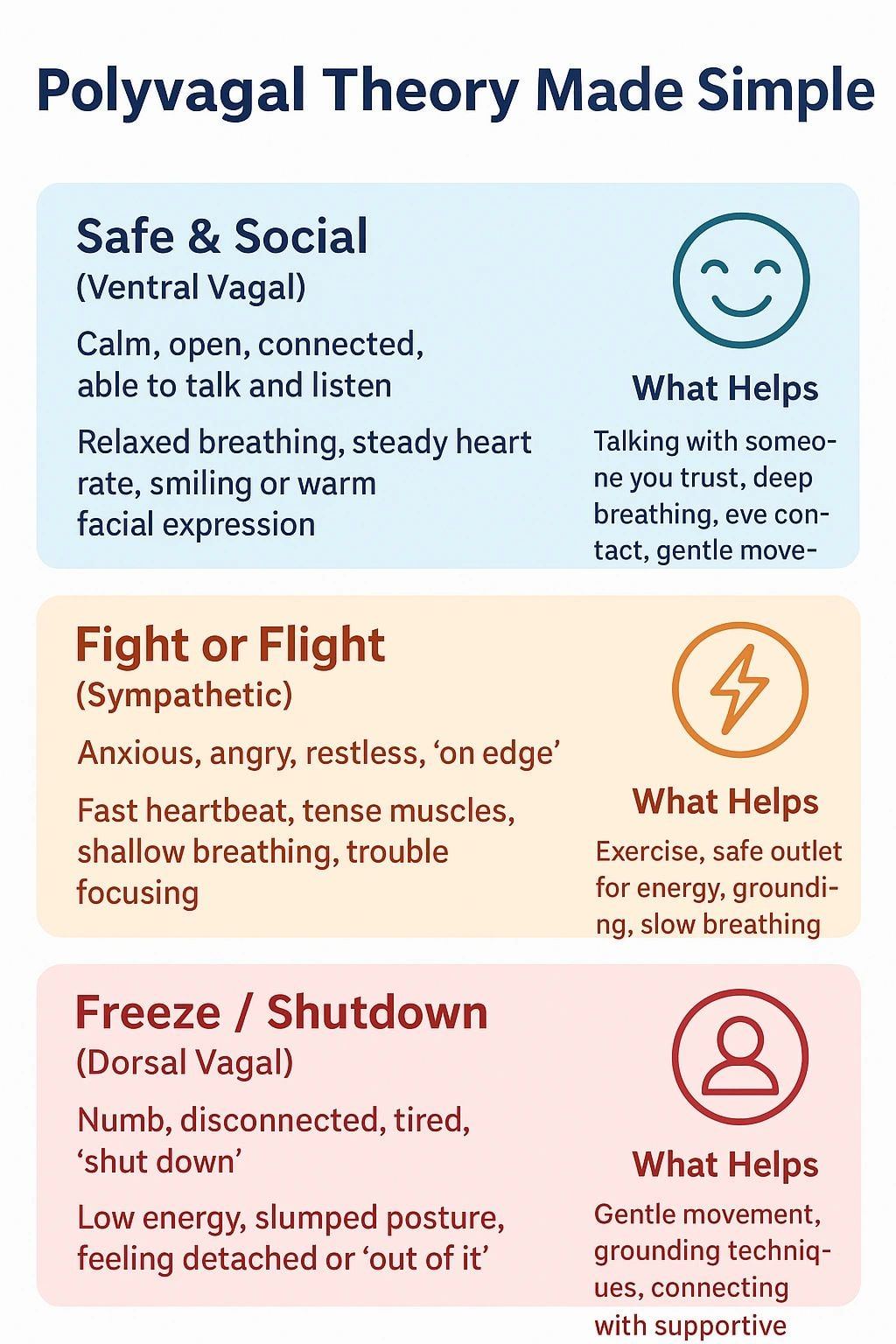
Even if you’re not in therapy, Polyvagal Theory has practical applications for daily life:
- Managing Anxiety: Use breathwork to calm sympathetic activation.
- Recovering from Stress: Grounding and safe connection with others help return to ventral vagal states.
- Building Stronger Relationships: Recognize that outbursts or shutdowns may reflect nervous system states, not personal failures.
- Improving Resilience: By learning your body’s cues, you gain tools to shift from stress back to calm.
Why Therapists Use Polyvagal Theory
For therapists, Polyvagal Theory is a useful theoretical framework to:
- Understand clients’ nervous system states.
- Reduce shame by reframing symptoms as adaptive responses.
- Provide trauma-informed care that respects the pace of healing.
- Integrate somatic, cognitive, and relational therapies effectively
Conclusion
Polyvagal Theory is a compassionate way of understanding ourselves. It provides a theoretical perspective that reframes trauma, anxiety, and depression not as personal flaws but as natural survival responses of the nervous system. With polyvagal-informed therapy, nervous system regulation, and supportive relationships, people can move from states of fear and shutdown back toward safety, connection, and healing.
References
- Porges, S. W. (2011). The polyvagal theory: Neurophysiological foundations of emotions, attachment, communication, and self-regulation. New York: W. W. Norton & Company.
- Dana, D. (2018). The polyvagal theory in therapy: Engaging the rhythm of regulation. New York: W. W. Norton & Company.
- Porges, S. W., & Kolacz, J. (2020). Neuroception and the body: How we move, think, and feel through the polyvagal perspective. Frontiers in Integrative Neuroscience, 14(33), 1–12. https://doi.org/10.3389/fnint.2020.00033
This content is for educational purposes only and is not intended as a substitute for professional medical or mental health advice, diagnosis, or treatment. Always seek the advice of your physician, therapist, or other qualified health provider with any questions you may have regarding a medical or psychological condition. If you are experiencing a medical or mental health emergency, please call 911 or go to your nearest emergency department.
This article is general information, not medical advice. It cannot diagnose you and is not a substitute for an evaluation by a licensed clinician.